


Dev tools, env vars, and tasks in one CLI
Getting started • Docs • Dev tools • Environments • Tasks • Bootstrap
Sponsored by


View all sponsors
mise (pronounced "meez", short for mise-en-place) installs a project's tools,
sets its environment variables, and runs its tasks from one mise.toml that
works in your shell, editor, and CI. With mise bootstrap, it can also set up a
whole machine: packages, dotfiles, and services.
- Install tools such as Node.js, Python, and Terraform from a registry of 1,000+, with a different version in each project.
- Set environment variables and load
.envfiles for each project. - Run tasks, such as build and test, with the project's tools and environment variables.
- Set up a machine with
mise bootstrap, which applies the system packages, dotfiles, repositories, and services you declare for it.
Use only the parts you need. You can start with one tool or one task.
Watch mise run a tool once with mise exec, set global defaults, and switch
Node.js versions as you move into and out of a project.
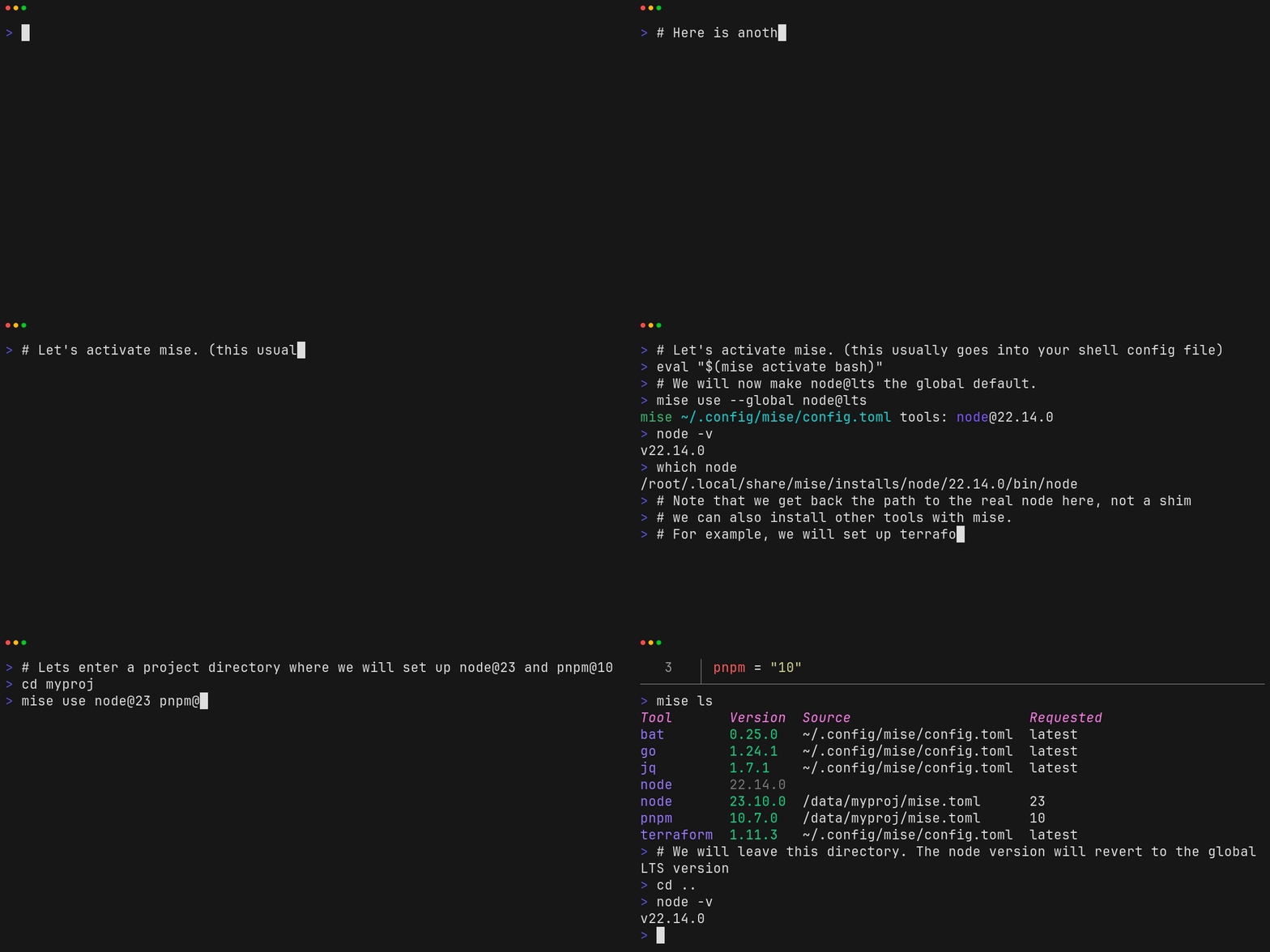
The demo transcript lists the commands with current versions.
On macOS or Linux:
curl https://mise.run | sh
~/.local/bin/mise --version
On Windows, run winget install jdx.mise. For Homebrew, apt, Scoop, and other
methods, see Installing mise.
The installer puts mise in ~/.local/bin. If that directory is not on your
PATH, type ~/.local/bin/mise wherever the steps below say mise, until you
activate mise in step 4.
mise exec node@24 -- node --version
# v24.x.x
mise exec installs Node.js 24 if needed and runs one command with it. It does
not change your shell or any config file, and it works without activation.
mkdir my-project && cd my-project
mise use node@24
mise use installs Node.js 24 and writes it to a new mise.toml. Add an
environment variable and a task to that file:
[tools]
node = "24"

[env]
NODE_ENV = "development"

[tasks.hello]
description = "Print the Node.js version and NODE_ENV"
run = 'node -e "console.log(process.version, process.env.NODE_ENV)"'
Run the task:
mise run hello[hello] $ node -e "console.log(process.version, process.env.NODE_ENV)"
v24.x.x development
The task runs with the project's Node.js and NODE_ENV. Commit mise.toml so
teammates and CI get the same setup. "24" is a version request for the
Node.js 24 series, not an exact pin; to share exact versions, use a
lockfile. Run
mise use python@3.14 to add another tool to the project, or
mise use --global node@24 to set a personal default in
~/.config/mise/config.toml.
To see what mise loaded in this directory:
mise config ls     # config files in use here
mise ls --current  # tool versions selected by those files
mise doctor # checks the installation and shell activationActivation puts a project's tools on your PATH and sets its environment
variables when you enter the project, so you can run node without
mise exec. If you installed with mise.run, run the commands for your
shell once:
# bash
echo 'eval "$(~/.local/bin/mise activate bash)"' >> ~/.bashrc
# zsh
echo 'eval "$(~/.local/bin/mise activate zsh)"' >> "${ZDOTDIR:-$HOME}/.zshrc"# fish
mkdir -p ~/.config/fish
echo '~/.local/bin/mise activate fish | source' >> ~/.config/fish/config.fishOpen a new shell. In my-project, node --version now prints v24.x.x. For
PowerShell, Nushell, and other shells, or for mise installed another way, see
Shell setup.
| To | Read |
|---|---|
| Follow the full tutorial | Getting started |
| Add mise to a project you already work on | Existing projects |
Join a project that already has a mise.toml |
Review its config, then run mise install and mise tasks ls (details) |
| Set up another shell or completions | Shell setup |
| Find a tool | Registry |
| Use mise in an editor or CI | Editors and IDEs · Continuous integration |
| Learn the main features | Dev tools · Environments · Tasks |
| Set up a new machine | Bootstrap · Dotfiles |
| Look up a command, setting, or config key | CLI reference · Settings · mise.toml |
| Fix a problem | Troubleshooting · FAQ |
| Contribute to mise or its docs | Contributing · Writing docs |
- Report bugs in GitHub Issues. Check
Troubleshooting first, and
include the command you ran, a minimal
mise.toml, the expected and actual behavior, and yourmise doctoroutput after you review it for private details. - Ask questions and share ideas in GitHub Discussions.
- Chat with other users on Discord.
For security reports and other contacts, see Contact. Before you use AI to reply to an Issue or Discussion, read the AI reply policy.

Thanks to Namespace for providing CI services for mise.